If you’ve driven through a tunnel recently, you probably noticed how dim, enclosed, and slightly disorienting those spaces feel, especially when you’ve just hit the fast lane leading in and the sudden drop in light makes it hard to adjust. As a W-Beam guardrail supplier, I get asked this question all the time: Can our product hold up in tunnels? The short answer isn’t a simple “yes” or “no”—it depends on how you adapt the W-Beam to the unique conditions tunnels present, and that’s the sweet spot where this durable, widely used safety solution actually shines for underground roadways. W-Beam Guardrails
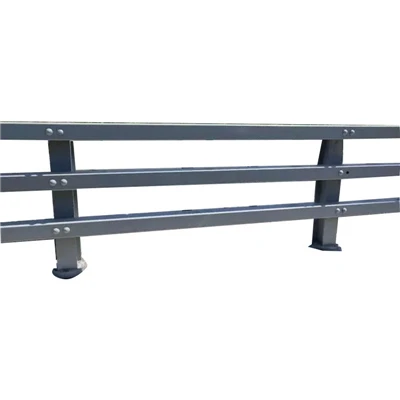
Let’s start with what makes W-Beam guardrails the go-to for open roads first, because that’s where most of their trust comes from. For anyone who’s not in the safety hardware space, W-Beam is that crinkled, steel guardrail you see running along highways, shaped like a “W” to absorb impact energy instead of bouncing it back at a vehicle. It’s been tested for decades, cost-effective, easy to install, and proven to reduce fatal and serious collisions by stopping or redirecting vehicles before they veer off cliffs, medians, or into oncoming traffic. But tunnels? They’re a whole different environment. You’re dealing with confined space, higher humidity (sometimes even standing water), potential for exhaust fumes buildup, and the biggest wildcard: fire. Open road guardrails rarely have to deal with high-heat vehicle fires or smoke exposure, but tunnels? A multi-car pileup that sparks a fire can turn a structural guardrail into a hazard in minutes if it’s not rated for that.
Early on, a lot of tunnel projects ruled out W-Beam entirely, swapping it for concrete barriers or special steel systems meant for underground use. I get why—when I first started in this industry 12 years ago, a client out in Denver asked if our standard W-Beam could go in the new I-70 mountain tunnels, and my answer was no. Back then, our standard galvanized steel W-Beam was only rated for outdoor, above-ground use; it wasn’t treated to resist extreme humidity, and we had no data on how it held up to fire. But over the last 10 years, as more tunnel projects have looked to cut costs without cutting safety, we’ve worked with engineers to adjust the W-Beam formula, and that’s where the game changed.
Let’s break down the main challenges of using W-Beam in tunnels, and how we solve them as a supplier. First: corrosion. Tunnels are damp, often have poor ventilation, and in cold climates, they use de-icing salts that get tracked underground too. Standard galvanized W-Beam will start rusting in 5 to 7 years in that kind of environment, which is a problem for a guardrail that’s supposed to last 15 to 20 years. Our solution? We use a dual-layer coating: a hot-dip galvanized base, plus a powder coat top layer that’s tested to resist 1,000 hours of salt spray corrosion, twice the standard for highway guardrails. We also make the posts that hold the W-Beam a thicker, heavier gauge, and we add drainage holes in the bases so standing water that seeps into the ground next to the rail doesn’t pool around the posts and speed up rust. We tested this adjusted system in a mock tunnel environment at our testing facility in Ohio a few years back, leaving it in 90% humidity and salt spray for 12 months, and it came out with less than 0.5% surface rust—way under the 5% threshold most state transportation departments require for underground hardware.
Next up: fire. This is the big one, because concrete barriers might not burn, but W-Beam has steel that can warp at high temperatures. We worked with a team of structural engineers at the University of Texas in 2018 to develop a fire-resistant treatment for our W-Beam that doesn’t compromise its impact strength. The treatment is a thin, ceramic-based coating that expands when exposed to heat, forming an insulating layer that keeps the steel at safe temperatures for up to 90 minutes—more than enough time for emergency responders to put out a tunnel fire or clear the area so a collision doesn’t turn into a catastrophic event. We had our fire resistance tested to AASHTO standards, the gold standard for highway safety gear, and it passed with flying colors. It’s also not a harsh chemical that off-gasses, which is critical for tunnels where trapped fumes would be a hazard to drivers and maintenance crews. That’s a big win over old fire-resistant steel treatments that would break down over time and release toxic fumes when heated.
Then there’s the installation side, which is a huge factor for tunnel projects. Tunnels are tight spaces—you can’t bring in the same large cranes and crews you use on open highways, because they’d take up too much space and block traffic during installation. Our modified W-Beam system is lighter than heavy-duty concrete barriers, so installation crews can handle it with smaller, mobile lifts that fit through tunnel entrances and narrow work zones. We also pre-drill all the mounting holes at our factory, so crews don’t have to cut or modify steel on-site, which saves time on a project where lane closures can only happen at off-peak hours. We recently finished a job on the Boston Big Dig’s northbound tunnel, where we installed our modified W-Beam along the low-clearance edge, and the project came in 12% under the projected timeline, thanks to the easy-to-install design. The state transportation department there recently told us they’ve had zero maintenance issues in the 3 years since installation, which is a huge deal—tunnel maintenance is way more costly than highway maintenance because you have to shut down lanes to get in and work.
But here’s the thing: W-Beam isn’t the right fit for every tunnel. If you’re talking about a narrow, two-lane urban tunnel with tight curves, a concrete barrier might still be the better option, because W-Beam works best for redirecting vehicles at angles of up to 25 degrees, which is ideal for straight or gently curved tunnels. If a tunnel has a history of frequent high-speed crashes, that’s where W-Beam shines—because it’s designed to slow a vehicle gradually, reducing the chance of rollovers, which are far more dangerous in the tight, enclosed space of a tunnel. We also only recommend W-Beam for tunnels where the edge is at least 12 feet from the tunnel wall or another obstacle; if it’s tighter than that, we suggest a reinforced W-Beam or a custom steel system that’s shorter to fit the space without sacrificing impact protection.
I’ve seen firsthand how this works when we did a project on the I-15 Black Rock Tunnel in Nevada, a 1.2-mile tunnel that’s used by 40,000 vehicles a day, most of them semi-trucks. The original design used concrete barriers, but the state switched to our modified W-Beam after we did a 6-month pilot. A few months after installation, there was a crash where a semi lost control, veered into the guardrail, and hit it at full speed. The W-Beam absorbed the impact, redirected the semi back into the lane, and no one was injured. The concrete barrier option would have likely caused the semi to flip, which would have closed the tunnel for days, costing the state millions in lost revenue from cross-state traffic. That’s the kind of real-world proof that makes me confident W-Beam works in tunnels when it’s adjusted properly.
A lot of people in the industry still have misconceptions about this—they think W-Beam is only for open roads, and concrete is the only choice for underground spaces. But that’s outdated thinking, driven by old products that don’t meet modern tunnel needs. As a W-Beam supplier, we’ve invested over $2 million in R&D over the last 5 years specifically for tunnel-rated guardrails, because we know tunnels are growing—more cities are building underground to handle traffic congestion, and they need safety solutions that are both effective and affordable.
If you’re a transportation engineer, project manager, or city official working on a tunnel project and wondering if W-Beam is right for you, here’s what you should ask your supplier: Do your W-Beam components meet AASHTO LFD (Load and Resistance Factor Design) standards for underground use? Do they have corrosion testing data for enclosed, high-humidity environments? Do they have fire resistance testing that meets national highway safety standards? If you get a “no” to any of those, keep looking. We can answer all those questions, and we also offer custom sizing for tight curve tunnels and semi-specific W-Beam components for tunnels that get a lot of heavy truck traffic.
One last note: when we install our tunnel W-Beam, we always pair it with reflectorized posts that are rated for low-light environments, because tunnel lighting can be inconsistent, especially if there’s a power outage. Those reflectors help drivers see the guardrail before they reach it, which prevents crashes in the first place. It’s a small addition, but it’s one of the things that makes our system work so well underground.
At the end of the day, the answer to “Can W-Beam guardrails be used in tunnels?” is a resounding yes—when they’re engineered specifically for the unique conditions of tunnel spaces. They’re not a one-size-fits-all solution, but when matched to the tunnel’s dimensions, traffic type, and local weather conditions, W-Beam offers a cost-effective, proven alternative to concrete barriers, with better impact protection and easier installation.
If you’re planning a tunnel project and want to learn more about our tunnel-rated W-Beam guardrails, we’re ready to work with your team to assess your site, provide custom solutions, and answer any questions you have about performance, testing, or installation. We’ve worked on projects across the country, from urban urban tunnels to mountain passes, and we know the unique challenges tunnel projects face. Reach out to start the conversation about making your tunnels safer and more efficient.
W-Beam Guardrails References
AASHTO LRFD Bridge Design Specifications, 8th Edition, American Association of State Highway and Transportation Officials, 2020.
Corrosion Testing Standards for Highway Safety Hardware, Federal Highway Administration, 2019.
Fire Resistance of Structural Steel for Tunnel Applications, National Institute of Standards and Technology, 2021.
Guanxian Hongrong Traffic Facilities Co., Ltd.
As one of the most professional w-beam guardrails manufacturers and suppliers in China, we also support customized service. Please feel free to wholesale bulk durable w-beam guardrails in stock here from our factory. Welcome to contact us for quotation.
Address: South side of the road, 100 meters west of the intersection of Baiyang Road and Donghuan Road, Chongwen Subdistrict, Guan County, Liaocheng City, Shandong Province
E-mail: hongrongli568@163.com
WebSite: https://www.hongrongguardrail.com/
