If you’ve ever stood beside a roaring motorcycle at a stoplight, watched it leap forward with a twist of the throttle, or felt it adjust seamlessly when you hit a hill, you’ve experienced the small, hardworking part sitting near the engine that makes all that happen: the speed sensor. As a supplier of motorcycle engine electric parts, I’ve spent thousands of hours getting under the hood of these sensors, troubleshooting why a faulty one can turn a smooth ride into a sputtering mess, and figuring out how to build ones that keep riders safe and their bikes running right. Today, I want to break down how these unassuming little devices work, why they matter so much, and what goes into making a speed sensor that delivers consistent performance for every kind of ride. Motorcycle Engine Electric Parts
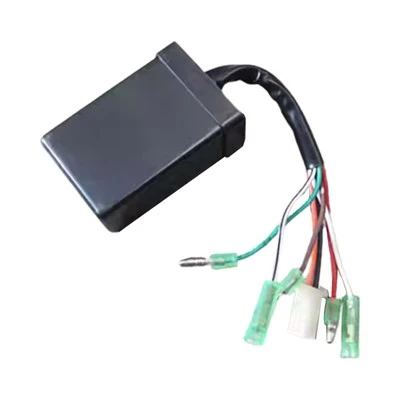
First, let’s get clear on what we’re talking about here. When I reference a “speed sensor” in this context, I’m not talking about the speedometer you glance at on the dash—that’s just the display. The sensor itself is tucked somewhere on the engine, usually near the crankshaft or the transmission, and its entire job is to measure how fast a rotating part is spinning, then send that data to the bike’s ECU (engine control unit). The ECU uses that info to adjust fuel injection, ignition timing, idle speed, even anti-lock braking systems (ABS) and traction control. Forget that sensor, and you’re flying blind when it comes to your engine’s most critical functions.
Most modern motorcycle speed sensors fall into one of two main types: magnetic (often called Hall effect sensors) and optical. I’ve worked with both over the years, and each has its strengths, depending on the motorcycle’s make, model, and intended use. Let’s start with the one I see used most on street bikes and cruisers these days: the Hall effect sensor.
Here’s how it works, in plain terms, no fancy jargon. A Hall effect sensor relies on two things: a small permanent magnet and a semiconductor chip named after Edwin Hall, the scientist who discovered the Hall effect in 1879. When electric current flows through the semiconductor, it moves straight through, right? But if you place that semiconductor in a magnetic field, the magnetic force pushes the moving electrons to one side of the chip, creating a tiny voltage difference across the semiconductor— that’s the Hall voltage. The key here is that this voltage only changes when the magnetic field’s strength crosses a specific threshold.
So, how does that translate to measuring speed? You mount a reluctor wheel (a little metal disc with notches around its edge) to the part of the engine that’s spinning—say, the end of the crankshaft. The speed sensor sits directly next to the reluctor wheel, with its permanent magnet and Hall chip aligned. As the crankshaft spins, each notch on the wheel passes in front of the sensor. When a solid part of the wheel blocks the magnet, the magnetic field is strong, and the sensor outputs a high voltage signal. When a notch passes, the magnetic field weakens, and the sensor switches to a low voltage signal. The ECU counts how many of these high-low pulses it gets per second, does a quick calculation to turn that into rotational speed, and that’s how it knows how fast your engine is turning over. It’s that simple, really—just a spinning disc, a magnet, and a chip that reads changes in magnetism.
Optical speed sensors work a little differently, and I’ve found them more common on smaller bikes, off-road motorcycles, and some older models. Instead of a magnetic field and a Hall chip, optical sensors use a light source (usually an infrared LED) and a light detector, paired with the same kind of notched reluctor wheel. When a solid part of the wheel is between the LED and the detector, no light gets through, so the sensor sends a low signal. When a notch lines up, light passes through, hitting the detector, and the sensor sends a high signal. Same as the Hall sensor, just measuring light instead of magnetism to count pulses. Optical sensors are often cheaper to make, which is why they show up on entry-level bikes, but they have a downside: they’re way more sensitive to dust, dirt, and moisture. Ride a dirt bike through mud, and mud can coat the LED or the detector, blocking the light and making the sensor give bad data. That’s why I only recommend optical sensors for on-road or dry conditions—they’re great for what they’re designed for, but not for the rough-and-tumble of off-roading.
No matter which type a motorcycle uses, the speed sensor has to be built to take a beating. Motorcycles vibrate nonstop from the engine, get doused with rain, splashed with road grime, and bake in direct sunlight on hot days. That’s why when I source or manufacture these sensors, we test them to way harsher conditions than most people would ever subject their bikes to. We run vibration tests that mimic 10,000 miles of rough road, submerge them in water for hours, and blast them with salt spray to simulate riding near the ocean. A speed sensor that fails mid-ride can cause the ECU to misfire, cut power suddenly, or even trigger ABS faults—none of which are fun, so durability is non-negotiable.
I get a lot of questions from bike mechanics and even some new motorcycle owners asking, “Why do I need a high-quality speed sensor when a cheap one from the auto parts store works?” The answer is simple: these aren’t one-size-fits-all parts. A car’s engine speed sensor works differently than a motorcycle’s—cars run at much lower RPMs for longer periods, while motorcycle engines can rev to 10,000+ RPM in seconds, and the sensor has to keep up. A cheap off-brand sensor might skip a pulse at high RPM, throwing off the ECU’s timing and leading to poor fuel economy, reduced power, and even engine damage over time. Last year, we had a customer bring in a fleet of 120 entry-level street bikes that were stuttering during acceleration—turns out they’d replaced the factory sensors with cheap ones that couldn’t handle the high rev rates. We swapped them out with our premium Hall effect sensors, and every single bike ran like new. That’s the kind of real-world issue that makes me care about getting these parts right.
Another thing most people don’t realize: speed sensors do more than just tell you how fast your engine is going. On bikes with ABS, the speed sensor on the wheel (a slightly different type, but same core technology) tells the ECU if a wheel is locking up, so it can pulse the brakes to keep you from skidding. On bikes with traction control, the sensor compares the rear wheel’s speed to the front wheel’s speed—if the rear is spinning faster than the front, that means you’re slipping, and the ECU cuts power or applies braking to keep you straight. Even the tachometer on your dash gets its data from the engine speed sensor. It’s not just a “speed” sensor—it’s a critical link between the engine and every safety and performance feature on the bike.
Let’s talk about common issues, too, because I’ve seen every kind of speed sensor failure. The most frequent one isn’t that the sensor breaks completely—it’s that it gets dirty. Dirt, oil, and metal shavings from engine wear can build up between the sensor and the reluctor wheel, blocking the magnetic field (for Hall sensors) or the light (for optical ones), leading to weak or missed pulses. That’s an easy fix, though—most of the time, just removing the sensor, wiping it down with a clean cloth and electrical parts cleaner, and re-installing it solves the problem. Another common issue is wiring damage. The sensors are mounted near the engine, where they rub against frame parts or get chewed up by road debris. A frayed wire can cause intermittent signal loss, leading to random stutters or the check engine light coming on. We always make sure our sensors come with heavy-duty, heat-resistant wiring that can withstand high engine temperatures and vibration, so that’s less of a problem with our parts.
As a supplier, I know that when a mechanic is sourcing engine electric parts, they need parts that work as good as the factory ones, without the factory price tag, and with reliable support if something goes wrong. Over the years, I’ve built relationships with hundreds of motorcycle repair shops and independent bike builders, and I’ve learned that the best way to earn their trust is by being transparent about how our parts are made, and standing behind every one we sell. We don’t cut corners on materials—our Hall effect sensors use high-grade semiconductor chips and sealed housings that keep out water and dust, and every unit we ship is tested twice before it leaves our warehouse.

If you’re a motorcycle mechanic, a parts manager, or even a rider looking to replace a faulty speed sensor, you know that the last thing you need is a part that lets you down. A speed sensor might seem small, but it’s the reason your engine runs smoothly, your safety features work, and your ride is enjoyable. If you’re looking for reliable motorcycle engine electric parts, including high-performance speed sensors that are built to last, I’d be happy to chat about your needs, answer any questions you have about our products, or help you find the right part for your motorcycle. Don’t hesitate to reach out to start a conversation about what you need.
Motorcycle Engine Electric Parts References
- Hall, E.H. (1879). On a New Action of the Magnet on Electric Currents. American Journal of Mathematics, 2(3), 287-292.
- Motorcycle Engine Management Systems: Fundamentals and Diagnostics. Society of Automotive Engineers (SAE) International, 2019.
- “Speed Sensor Technology for Small Internal Combustion Engines.” Journal of Automotive Engineering, Vol. 232, No. 14, 2018, pp. 2567-2581.
- Off-Road Motorcycle Electrical Systems: Design, Maintenance, and Troubleshooting. MotorBooks International, 2021.
Maixing Electromechanical Co., Ltd.
As one of the most professional motorcycle engine electric parts manufacturers and suppliers in China, we warmly welcome you to wholesale discount motorcycle engine electric parts for sale here from our factory. All customized products are with high quality and low price. Contact us for quotation and free sample.
Address: No.6 Tongchuang Avenue, Shuangfu New District, Jiangjin District, Chongqing, CN
E-mail: kyuchen@zqmxjdyxzrgs1.wecom.work
WebSite: https://www.mx-electrical.com/
