As a longtime supplier of kraft paper, I’ve been asked countless times about the durability of this remarkable material. Durability is a multifaceted concept, and when it comes to kraft paper, understanding its various aspects can help customers make informed decisions for their specific applications. Kraft Paper

Physical Structure and Its Impact on Durability
Kraft paper gets its name from the German word "kraft," which means strength. This name aptly describes its inherent characteristic. The production process of kraft paper involves the kraft pulping method. In this process, wood chips are cooked in a chemical solution, typically a mixture of sodium hydroxide and sodium sulfide. This cooking process breaks down the lignin in the wood, which is the natural glue that holds the wood fibers together. As a result, the cellulose fibers are separated and can be reformed into paper.
The long, strong cellulose fibers obtained through the kraft pulping process are the key to kraft paper’s durability. These fibers interlock with each other during the papermaking process, creating a dense and strong network. This network gives kraft paper excellent tensile strength, which is the ability to resist being pulled apart. For example, in packaging applications, this tensile strength ensures that the paper can withstand the stress of being filled with heavy items, lifted, and transported without tearing easily.
Resistance to Tearing and Puncturing
One of the most important measures of kraft paper’s durability is its resistance to tearing and puncturing. The interwoven cellulose fibers mentioned earlier play a crucial role here. The long – fiber structure distributes the force applied to the paper more evenly. When a sharp object tries to puncture the paper, the fibers around the point of contact stretch and absorb the energy, preventing the object from easily piercing through.
In addition, the manufacturing process can be adjusted to enhance this resistance. For instance, by controlling the thickness of the paper, we can offer different levels of puncture and tear resistance. Thicker kraft papers generally have more fibers per unit area, providing greater protection against external forces. This makes them suitable for applications where the contents are likely to rub against the package or where there is a risk of sharp edges within the product, such as in industrial packaging of metal parts.
Moisture Resistance
Moisture can significantly affect the durability of paper products. Kraft paper, in its natural state, has some inherent moisture resistance due to the hydrophobic nature of cellulose fibers. However, this resistance can be further enhanced through various treatments.
Coating is one common method. Applying a thin layer of wax or polyethylene on the surface of the kraft paper creates a barrier that prevents moisture from seeping in. This is particularly useful in applications where the paper will be exposed to a humid environment or in contact with damp products. For example, in the food industry, coated kraft paper can be used to package fresh produce or baking goods. The moisture – resistant coating helps to maintain the integrity of the package and protects the contents from spoilage due to moisture absorption.
Another way to improve moisture resistance is through sizing agents. These agents are added to the pulp during the papermaking process. They fill the spaces between the fibers, reducing the paper’s ability to absorb water. Sizing can be either internal or surface – applied, each with its own advantages depending on the specific requirements of the final product.
Chemical Resistance
In some industrial applications, kraft paper may come into contact with various chemicals. The durability of kraft paper in such situations depends on its chemical resistance. Cellulose, the main component of kraft paper, is relatively stable and resistant to many common chemicals. However, strong acids and alkalis can break down the cellulose fibers, reducing the paper’s strength.
To enhance chemical resistance, special treatments can be applied. For example, some kraft papers are treated with chemical – resistant polymers. These polymers form a protective layer on the surface of the paper, preventing the chemicals from reaching the cellulose fibers. This makes the paper suitable for applications in the chemical industry, such as packaging for certain types of fertilizers or cleaning products.
Environmental Durability
When considering the long – term durability of kraft paper, we also need to take into account its performance in different environmental conditions. Kraft paper is biodegradable, which means it will naturally break down over time when exposed to the environment. However, this does not necessarily mean it lacks durability in the short – to medium – term.
In outdoor applications, kraft paper can be exposed to sunlight, wind, and rain. Ultraviolet (UV) radiation from the sun can cause the cellulose fibers to degrade, weakening the paper. To combat this, UV – resistant additives can be incorporated into the paper during manufacturing. These additives can absorb or reflect the UV radiation, protecting the cellulose fibers from damage.
In addition, the porosity of kraft paper can be adjusted to control its breathability. This is important in outdoor applications where moisture needs to be able to escape to prevent the growth of mold and mildew. A well – engineered kraft paper can maintain its integrity even in challenging outdoor environments for a reasonable period.
Durability in Packaging Applications
In the packaging industry, the durability of kraft paper is of utmost importance. It is used in a wide range of packaging products, from shipping boxes to grocery bags.
For shipping boxes, kraft paper needs to withstand the rigors of the transportation process. It must be able to resist crushing, tearing, and puncturing during loading, unloading, and transit. The stacking strength of kraft paper in boxes is also crucial. Boxes are often stacked on top of each other in warehouses and during transportation, and the paper must be able to support the weight without collapsing.
Grocery bags made from kraft paper need to be strong enough to carry heavy items such as groceries. They should be able to resist tearing even when the handles are under stress. The durability of grocery bags also contributes to their reusability, which is an important aspect of sustainable packaging.
Durability in Other Applications
Kraft paper’s durability also makes it suitable for other non – packaging applications. In construction, it can be used as a building paper or underlayment. Its tear resistance and moisture – resistant properties make it an effective barrier against water and moisture, protecting the building structure from damage.
In the arts and crafts industry, kraft paper is a popular choice due to its durability. It can be used for making cards, scrapbooking, and other creative projects. The paper’s ability to hold up to cutting, folding, and gluing makes it a reliable material for artists and hobbyists.
Conclusion and Call to Action
In summary, the durability of kraft paper is a complex and multi – faceted characteristic. It is influenced by the physical structure of the paper, as well as its resistance to tearing, puncturing, moisture, chemicals, and environmental factors. Whether you are in the packaging, construction, or arts and crafts industry, the durability of kraft paper can meet your specific needs.
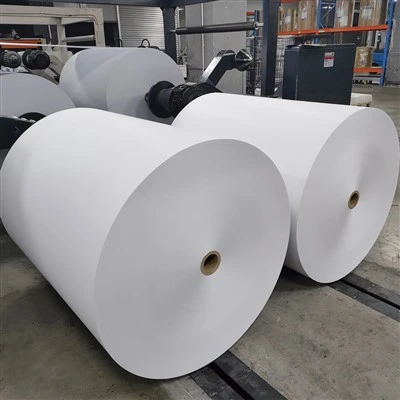
If you are looking for high – quality kraft paper with excellent durability, I invite you to reach out to me. We have a wide range of kraft paper products, each carefully engineered to provide the best performance for different applications. Let’s start a conversation about how our kraft paper can enhance your products and processes.
Tracing Paper References
- Page, D. H. (1969). "The physical properties of paper: their significance, measurement, and prediction". Tappi Press.
- Seth, R., & Page, D. H. (1997). "Papermaking principles and practice". Tappi Press.
- Walker, A. C. (2006). "Kraft Pulping: Principles and Practice". CRC Press.
Dongguan Banyan Material Co., Ltd.
We are one of the most experienced kraft paper manufacturers and suppliers in China, also support customized service. Please feel free to wholesale bulk eco-friendly kraft paper from our factory. Quality products and reasonable price are available.
Address: NO.167, Meijing West Road, Songmushan, Dalang Town, Dongguan City, Guangdong Province, China
E-mail: Sales_chris@yspaper.com
WebSite: https://www.paperyoung.com/
