As a supplier of pole-mounted transformers, I’ve been in this business for quite a while, and one question that comes up regularly is, "How do you select the right fuse for a pole-mounted transformer?" It’s a crucial question because getting the fuse selection right can prevent a whole bunch of headaches and keep your electrical system running smoothly. Pole Mounted Transformer
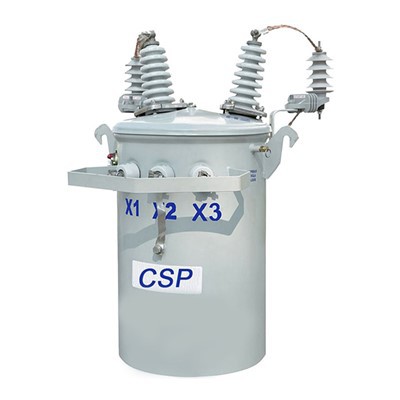
Let’s start with the basics. A fuse is like a safety valve for your pole-mounted transformer. It protects the transformer from overcurrents that could damage it. When there’s an excessive current flowing through the system, the fuse blows, breaking the circuit and stopping the flow of electricity. This might seem like a simple device, but choosing the wrong fuse can lead to either the transformer not being properly protected or unnecessary fuse blowing, which can be a real pain in the neck.
So, how do we start the process of selecting the right fuse? Well, the first thing you need to look at is the transformer’s full – load current. This is the amount of current that the transformer is designed to carry under normal operating conditions. You can usually find this information in the transformer’s nameplate. It’s super important because the fuse rating should be based on this value.
Typically, you’ll want to choose a fuse with a rating slightly higher than the transformer’s full – load current. Why? Well, there are often small fluctuations in the current, and if the fuse rating is too close to the full – load current, it might blow even under normal operating conditions. But at the same time, you don’t want to go too high with the fuse rating. If the fuse is rated way above the transformer’s full – load current, it won’t blow when there’s an actual overcurrent situation, and that can cause serious damage to the transformer.
For example, if your pole – mounted transformer has a full – load current of 50 amps, a common rule of thumb is to choose a fuse with a rating of around 60 – 70 amps. But it’s not always that straightforward. You also need to consider the type of load that the transformer is supplying.
If the load is a motor or some other equipment that has a high inrush current (the large current that flows when the equipment is first turned on), you’ll need to account for that. Motors, for instance, can draw several times their normal operating current when they start up. In this case, you might need to choose a fuse with a higher rating to prevent it from blowing during these start – up surges. However, you still have to make sure that the fuse will blow if there’s a true overcurrent condition.
Another factor to consider is the environment in which the pole – mounted transformer is located. If the transformer is in a hot climate, the fuses operate at a higher temperature. And heat can affect the performance of the fuse. A fuse that might work well in a cooler environment could blow more easily in a hot one. So, in areas with high ambient temperatures, you might need to adjust the fuse rating accordingly. You may need to choose a slightly higher – rated fuse to compensate for the increased operating temperature.
On the other hand, if the transformer is in a cold climate, the fuse might be less likely to blow. But you still have to be careful because extremely low temperatures can also have an impact on the fuse’s performance. In cold conditions, the fuse material might become more brittle, and it could potentially break under normal operating stresses.
The short – circuit current of the system is also a key consideration. The short – circuit current is the current that flows when there’s a short circuit in the electrical system. You need to choose a fuse that can handle the maximum short – circuit current without exploding or causing other safety hazards. This involves looking at the interrupting rating of the fuse. The interrupting rating indicates the maximum current that the fuse can safely interrupt. You want to make sure that the interrupting rating of the fuse is higher than the maximum short – circuit current of your system.
Let me share a little story from my experience. I once had a customer who was having problems with their pole – mounted transformer. The fuses were blowing frequently, and they couldn’t figure out why. When we took a closer look, we found that they had chosen fuses with a rating that was too close to the transformer’s full – load current. Also, the load was a large motor with a high inrush current. So, every time the motor started, the fuse would blow. We recommended changing to a higher – rated fuse that could handle the inrush current, and the problem was solved.
Now, when it comes to the types of fuses available for pole – mounted transformers, there are a few options. One common type is the current – limiting fuse. These fuses are designed to quickly interrupt the current when there’s an overcurrent situation, which helps to protect the transformer. They work by creating a high – resistance path when the current exceeds a certain level, which reduces the amount of energy that reaches the transformer.
Another type is the expulsion fuse. Expulsion fuses are relatively simple and inexpensive. They work by using an arc to blow out a tube, which interrupts the current. However, they aren’t as precise as current – limiting fuses when it comes to interrupting the current. They are more suitable for systems where the short – circuit currents aren’t extremely high.
Choosing between these two types of fuses depends on your specific requirements. If you need a more precise and reliable protection for your transformer, especially in high – fault – current systems, a current – limiting fuse might be the way to go. But if cost is a major factor and your system doesn’t have extremely high short – circuit currents, an expulsion fuse could be a good option.
In addition to the technical aspects of fuse selection, it’s also important to think about maintenance. You want to choose a fuse that is easy to replace and that has a long service life. Some fuses come with indicators that show when they have blown, which can make maintenance a lot easier.
Well, I hope this gives you a good idea of how to select the right fuse for a pole – mounted transformer. It’s a process that involves looking at the transformer’s full – load current, the type of load, the environment, the short – circuit current of the system, and the type of fuse. If you’re in the market for a pole – mounted transformer and need help with fuse selection, don’t hesitate to reach out. We’re here to assist you in making the right choices for your electrical system.
Power Transformer References:
- Electrical Equipment Handbook: Guidelines for Specification, Testing, and Maintenance
- Standard Handbook for Electrical Engineers
Nantong Yawei New Energy Technology Co., Ltd.
As one of the most professional pole mounted transformer manufacturers and suppliers in China, we’re featured by quality products and good service. Please rest assured to wholesale durable pole mounted transformer made in China here from our factory. Customized orders are welcome.
Address: Room 28-101, Building 27 and 28, No.333 Kaiyuan Avenue, Sunzhuang Subdistrict, Hai’an City, Nantong City, Jiangsu Province, China
E-mail: admin@nantongyawei.com
WebSite: https://www.nantongyawei.com/
