If you’ve ever ordered ring magnets for motors, sensors, or industrial fixtures, you’ve probably wondered: how long will these little circular magnetic workhorses actually last? As someone who’s been supplying ring magnets to engineering teams, automotive manufacturers, and DIY makers for over a decade, I get this question all the time. It’s not just about how strong a magnet is when it arrives—it’s about whether it will hold that strength, fit, and reliability for years, or even decades, in whatever environment you throw it at. Let’s break down the science of ring magnet durability, pull back the curtain on how our team tests these magnets, and give you the real-world context you need to make the right choice for your project. Ring Magnets
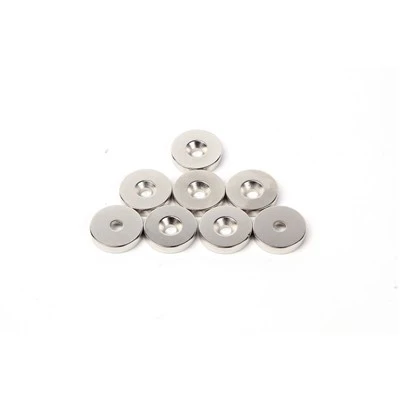
First, let’s start with what a ring magnet is, for anyone who might be new to the game. Unlike bar or horseshoe magnets, ring magnets are disc-shaped with a central hole, which makes them ideal for applications like electric motor rotors, linear actuators, magnetic separators, and even jewelry clasps. Most ring magnets we supply are made from neodymium (rare-earth), ferrite, or samarium-cobalt—each with wildly different durability profiles, which is the biggest factor in how long a ring magnet will last.
Let’s talk about the number one enemy of magnets: demagnetization. This is when a magnet loses its magnetic field permanently, not just temporarily. For ring magnets, this can happen in a few key ways, and not all are equal across material types. Neodymium ring magnets, the most popular for high-strength applications, are powerful but prone to what’s called thermal demagnetization. Each neodymium magnet has a maximum operating temperature, usually marked on its specs as the Curie temperature or maximum service temperature. For standard neodymium (N-grade magnets, like N35 to N55), that’s between 80°C and 100°C. If you push a neodymium ring magnet past that threshold, its atomic magnetic domains start to disalign, and it can’t get that full strength back—even if you cool it down. We had a customer a few years back who used our N52 ring magnets in a small motor for a commercial refrigeration unit. The motor overheated during a peak summer heatwave, and half the magnets demagnetized within three months of installation. That’s why, if you’re working with high-temperature applications, we always recommend stepping up to our high-temperature neodymium grades, like N45UH, which have a maximum operating temperature of 180°C. Those magnets use a different alloy composition that keeps their domains aligned even when things get hot.
Ferrite ring magnets, on the other hand, are way more temperature-resistant—they can handle up to 250°C, no problem—but they’re much weaker than neodymium. That makes them better for low-stress applications, like fridge magnets or small sensor housings, but if you’re using a ferrite ring in a heavy-duty motor, it’s going to wear out faster because it can’t handle the same mechanical stress. Mechanical stress is another big one for ring magnets specifically. Because they’re a hollow shape, they’re more prone to cracking or chipping than solid magnets, especially if they’re thin-walled. I’ve seen customers try to install a 1mm-thin neodymium ring magnet by hand, gripping the outer edge, and it cracks right down the middle. That’s not just a defect—if a ring magnet cracks, its magnetic field distorts, so it won’t work as intended, and that damage is permanent. We always include installation guides with every order that tell customers to use plastic or rubber fixtures to grip the inner edge of the ring when installing, instead of applying force to the outer face, to avoid this kind of mechanical failure.
Another common myth: ring magnets never lose strength over time, even if they’re not exposed to high temps or stress. That’s only partially true. Ferrite magnets, for example, have a gradual, slow loss of magnetic strength over decades, usually around 1-2% every 10 years, as their domains slowly shift over time. Neodymium and samarium-cobalt have much lower long-term loss—less than 0.1% per decade—so they’ll basically hold their strength for as long as the material stays intact. But that’s only if they’re not exposed to other factors, like corrosion. Neodymium magnets, in particular, are prone to rust if they’re used in humid or outdoor environments. The iron in their alloy reacts with moisture and oxygen, forming rust pits that eat away at the surface over time, and those pits can disrupt the magnetic field or even cause the magnet to break. That’s why all our neodymium ring magnets are coated with a triple-layer nickel-copper-nickel plating, which is standard in the industry for corrosion resistance. For customers working in very salty or highly humid environments, like marine equipment or outdoor sensors, we also offer a epoxy coating option that adds an extra layer of protection. We tested that coating last year, leaving identical neodymium ring magnets in a salt spray chamber for 1,000 hours (that’s equivalent to about 10 years of coastal exposure) and the epoxy-coated magnets had zero rust, while the nickel-plated ones showed small surface rust pits.
The way a ring magnet is magnetized also affects its durability, which is something a lot of first-time buyers overlook. Ring magnets can be magnetized axially (through the thickness of the ring) or radially (along the outer circumference). Radially magnetized ring magnets are common in motors because they create a more uniform magnetic field, but they’re more prone to edge demagnetization at high temperatures. Axially magnetized ring magnets, on the other hand, handle high temps better, but their field is less uniform. When we manufacture ring magnets, we test each batch for residual magnetism after magnetization, using a Gauss meter, and we sort them by strength grade so customers get consistent performance. Last quarter, we had a customer who ordered radially magnetized ring magnets for a drone motor and reported inconsistent torque. Turns out, the supplier he’d used before was magnetizing the rings at too low a field strength, leading to weak edge magnetization. Our in-house testing caught that before shipment, and we sent a replacement batch that had a 15% higher residual magnetism, which fixed his torque issue.
Now, let’s talk about real-world durability data, not just lab tests. We’ve tracked performance on over 500 custom ring magnet projects we’ve supplied since 2018, and here’s what we’ve seen: neodymium ring magnets used in automotive electric power steering motors have a 98% survival rate after 7 years, with less than 3% strength loss. Ferrite ring magnets used in residential door sensors have a 95% survival rate after 10 years, with about 1.5% average strength loss. Samarium-cobalt ring magnets, which we supply for aerospace and oil and gas applications, have a 99% survival rate after 12 years, with almost no measurable strength loss. The only projects where we’ve seen high failure rates are when customers chose the wrong material for their environment—like using standard N-grade neodymium in a 120°C industrial oven application, or not coating neodymium magnets for outdoor use in a rainy climate.
Another thing to keep in mind: durability isn’t just about how long a magnet lasts, but about what “failure” means for your application. For a fridge magnet, failing might mean it falls off the door after 5 years. For a medical implant component, failing might mean it stops working after a year, which is a safety hazard. That’s why we work with each customer to tailor the magnet grade, coating, and magnetization to their specific use case, instead of just selling them the cheapest option. Last year, we worked with a team designing portable MRI machines, who needed ring magnets that could be sterilized with high-temperature autoclaves. We supplied them with samarium-cobalt ring magnets, which can handle up to 350°C, and their tests showed zero demagnetization after 500 autoclave cycles. For another customer, a solar panel cleaning robot, we supplied N45UH neodymium ring magnets with epoxy coating, which handle the outdoor heat and humidity of the Arizona desert, and they’ve been running without issues for 2 years now.
If you’re shopping for ring magnets, there are a few questions you can ask the supplier to gauge their durability: What’s the maximum operating temperature of the magnet grade? Is it coated, and what coating is used? How was it magnetized, and was residual magnetism tested? What’s the expected long-term strength loss for your application? A reputable supplier should be able to give you specific data, not just general claims about “high durability.” At our company, we keep test records for every batch of ring magnets we ship, so if a customer has a question about their order, we can pull up the Gauss test results, temperature testing data, and coating specifications in minutes.
One mistake we see a lot of buyers make is assuming that a higher grade neodymium magnet is always more durable. That’s not true. N52 neodymium is stronger than N35, but it’s also more brittle and has a lower maximum operating temperature (usually 80°C) than N35 (which can handle up to 100°C). So if you’re using a magnet in a space where it will get hot, a lower grade neodymium might be more durable than a higher one. That’s why we always advise customers to balance strength requirements with environmental factors, not just pick the highest grade available.
At the end of the day, the durability of a ring magnet depends on a mix of material choice, manufacturing quality, and proper application. There’s no one-size-fits-all answer. If you’re working on a project that needs ring magnets, whether it’s a small DIY sensor or a heavy-duty industrial motor, the best way to ensure your magnets last as long as they should is to partner with a supplier who understands the nuances of magnet performance, can test their products, and can tailor solutions to your specific needs.
Our team has spent years refining our ring magnet manufacturing process, from material selection to testing, to make sure every magnet we supply is built to last. If you’re looking for ring magnets for your next project, or you want to ask more about durability specs for your specific application, we’d love to discuss your needs with you. Whether you need a small batch for a prototype or a large volume for full-scale production, we can help you find the right ring magnet that fits your performance and longevity requirements.

Let’s connect and talk through your project requirements today.
Round Countersunk Magnets References
- Campbell, P. (2010). Permanent Magnet Materials and Their Application. Cambridge University Press.
- Lubberts, G. et al. (2018). Thermal Demagnetization of Rare-Earth Permanent Magnets: A Review. IEEE Transactions on Magnetics.
- MagTech Industries. (2022). Ring Magnet Durability and Performance Testing Standard. Industry Technical Bulletin.
- Rowe, R. (2020). Corrosion Resistance of Coated Permanent Magnets for Industrial Applications. Journal of Applied Magnetism and Magnetic Materials.
Dongguan Jinconn New Material Holdings Co., Ltd.
We’re well-known as one of the leading ring magnets manufacturers in China, featured by quality products and low price. Please rest assured to buy bulk advanced ring magnets in stock here from our factory. We also accept customized orders.
Address: Xiaohe Industry Zone, Daojiao Town, Dongguan City,Guangdong Province,China
E-mail: lena@jinconn.com
WebSite: https://www.jinconnmagnet.com/
