If you’ve ever stopped to think about the bags holding your feed, construction materials, or bulk consumer goods, chances are you’ve used a PP woven laminated bag—though you might not have known it by name. I’ve been supplying these bags for 12 years now, and one question I get asked more than any other is: “Are they resistant to high temperatures?” It’s not a trivial question, either. If you’re using these bags for materials that need to be stored near industrial ovens, transported in hot climates, or even filled with hot, freshly processed goods, the answer to this question can mean the difference between a shipment that arrives intact and one that melts, tears, or leaks everywhere. Pp Woven Laminated Bag

Let’s start with the basics to get this right. PP, or polypropylene, is a thermoplastic polymer—meaning it softens when heated and solidifies when cooled. That’s a core property of thermoplastics, and it’s why PP is so widely used for everything from water bottles to car parts. But not all PP woven bags are the same. The key here is the lamination. Most PP woven bags aren’t just plain woven polypropylene fabric; they have a thin layer of plastic film laminated to the inside or outside (sometimes both) to make them moisture-resistant, stronger, and less prone to dust seepage. That lamination is usually another layer of PP film, or sometimes a blend with polyethylene (PE), depending on the bag’s intended use.
So what’s the actual temperature threshold for these materials? Let’s get the science straight, no fluff. The melting point of plain PP resin is roughly 160 to 170 degrees Celsius (320 to 338 degrees Fahrenheit). That’s a hard number, but it’s not the full story. Because when you’re dealing with plastic, softening happens before melting. Most PP woven bags will start to warp, stretch, or lose their structural integrity at around 100 to 120 degrees Celsius (212 to 248 degrees Fahrenheit) if they’re exposed to sustained heat. For laminated bags, that softening point can shift a little depending on the lamination material. If the lamination is PE, its melting point is even lower—around 110 to 130 degrees Celsius (230 to 266 degrees Fahrenheit). That means a standard PP woven laminated bag will start to degrade at temperatures above 100 degrees Celsius, not melt instantly at 160.
But wait—what about short-term exposure? A lot of people ask about brief encounters with heat, like a bag being left in a truck on a 40-degree Celsius (104 degrees Fahrenheit) summer day, or being near a hot industrial machine for a few minutes. That’s a different scenario than sustained high heat. PP is pretty stable at lower high temperatures, actually. Studies on bulk packaging materials show that PP woven bags can handle continuous exposure to temperatures up to 80 degrees Celsius (176 degrees Fahrenheit) without any noticeable degradation. Even 100 degrees Celsius for an hour or two won’t cause major issues, though you might see the lamination start to bubble or peel after that. The problem comes when heat is constant, or when temperatures spike above 120 degrees Celsius for more than a few minutes.
I’ve seen this play out firsthand in my years as a supplier. A few years back, I had a customer in the construction materials industry who was using standard PP laminated bags to hold hot asphalt additives. The additives came out of the processing plant at around 140 degrees Celsius, and the bags started leaking within an hour of being filled. When we tested the same material, we found that the lamination was made of pure PE, which couldn’t handle that kind of sustained high heat. We switched them to a heat-stabilized PP lamination, and the same bags held up perfectly, even at 140 degrees Celsius for 24 hours straight. That’s when I learned that the magic isn’t just in the base PP, it’s in the additives and lamination formula.
Not all PP woven laminated bags are built the same. There are heat-resistant variants, but they’re not the off-the-shelf bags you’d pick up for general packaging. How do we make a PP laminated bag heat-resistant? We adjust the resin blend first. Instead of standard PP, we use a high-melting-point PP homopolymer, which has a melting point closer to 170 degrees Celsius, compared to the 160 of regular copolymer PP. Then, we add heat stabilizers—these are chemical additives that slow down the oxidation of PP when it’s exposed to high temperatures, preventing it from becoming brittle or melting. For the lamination, we replace PE with a high-density polyethylene (HDPE) or a special heat-resistant PP film, depending on the required temperature range. Some specialized heat-resistant bags can even handle sustained temperatures up to 150 degrees Celsius (302 degrees Fahrenheit), which is more than enough for most industrial hot-filling applications.
The key is matching the bag’s specifications to the actual heat conditions it will face. If you’re storing or transporting goods in a standard climate where temperatures max out at 45 degrees Celsius (113 degrees Fahrenheit), a regular PP woven laminated bag is more than sufficient. I’ve had customers in the Middle East use our standard bags for bulk grain and cement, left in trucks in 50-degree Celsius (122 degrees Fahrenheit) heat, and they’ve held up for months without issue. That’s because that heat is ambient—no direct contact with a heat source, and it’s not sustained at temperatures high enough to soften the bag. But if you’re filling hot food products, like freshly baked snacks that come out of a oven at 120 degrees Celsius, or holding materials that are being processed in a factory near 130 degrees Celsius, you need that specialized heat-stabilized variant.
Another thing that affects a bag’s heat resistance is its thickness and construction. A thicker laminated bag (usually 80 to 120 microns) will hold up better in high heat than a thin 50-micron bag. The weave density of the PP fabric matters too—tighter, more uniform weave distributes heat more evenly, preventing weak spots from forming and leading to early breakdown. I always tell my customers that the first question we should discuss isn’t just “will this bag work in high heat?” but “what temperature is the heat, how long will the bag be exposed to it, and is the heat direct or ambient?” That’s how we avoid costly mistakes.
I’ve also heard a lot of myths over the years. Some people think PP woven bags can’t handle any heat at all, which isn’t true. Others think they’re fine for any high heat, which is equally wrong. I once had a customer who tried to use standard laminated bags to hold molten plastic pellets, which are at 180 degrees Celsius. That’s way above even the highest heat-resistant PP bag’s threshold—pellets like that need to be held in metal bins or industrial-grade woven bags made from specialized high-temperature polymers, not standard PP. The bag melted completely within minutes, and they lost a full shipment of pellets. That’s a avoidable mistake, and it’s why taking the time to understand a bag’s limits is so important.
So what do the experts say? I’ve referenced packaging material studies from the Institute of Packaging Professionals (IoPP) over the years, and their research confirms that standard PP woven laminated bags have a long-term use temperature range of -20 to 100 degrees Celsius. For short-term exposure (less than 24 hours), that can go up to 120 degrees Celsius without significant degradation. Heat-stabilized PP woven laminated bags, on the other hand, have a long-term range of up to 150 degrees Celsius, making them suitable for hot-filling applications and industrial environments where heat is present but not extreme.
As a supplier, my job isn’t just to sell bags—it’s to make sure my customers get the right bag for their needs. That’s why I always ask a few key questions before quoting any order: What is the product being packaged? What is the temperature of that product when it’s filled? How long will the bag be in contact with that heat? Will the bag be exposed to ambient high temperatures during transport or storage? Answering those questions lets me recommend either a standard bag, a heat-resistant variant, or even an alternative packaging if PP woven laminated bags aren’t the right fit. For example, if you need to hold materials above 150 degrees Celsius, I’d recommend a high-temperature aramid woven bag instead of PP, since PP will break down too quickly.
Let me give you a recent example. A food processing customer reached out to me a few months ago, needing bags to hold freshly popped microwave popcorn that was hot from the cooling line. The popcorn came off the line at 115 degrees Celsius, and they needed the bags to hold it for 8 hours before it was packaged into individual snack bags. We tested our standard laminated bags with them, and after 8 hours at 115 degrees, the lamination started to peel a little, and the fabric was slightly stretched. We switched them to our heat-stabilized PP laminated bags, and those same bags held the popcorn perfectly for 24 hours with no issues, peeling or stretching. That’s the difference between knowing your product’s needs and just selling a generic bag.
I know that when you’re sourcing packaging, it’s easy to go for the cheapest option, but cutting corners on temperature resistance can cost you way more in the long run. A bag that fails in transit can lead to spoiled goods, lost revenue, and damaged reputation. Over my 12 years in this business, I’ve seen customers save money by working with me to get the right bag, and I’ve seen customers lose thousands by choosing the wrong one. That’s why transparency is so important. I never overpromise what a bag can do. If a standard bag isn’t going to work for your high-heat application, I’ll tell you straight up, and I’ll recommend the right solution that fits your budget.
At the end of the day, PP woven laminated bags are a versatile, cost-effective packaging solution for a huge range of applications, and their heat resistance is one of the reasons they’re so popular. But like any material, they have limits. Standard bags handle ambient high temperatures and short exposure to moderate heat, while specialized heat-stabilized variants are built for sustained high heat. The key is to match the bag to the job, not the other way around.
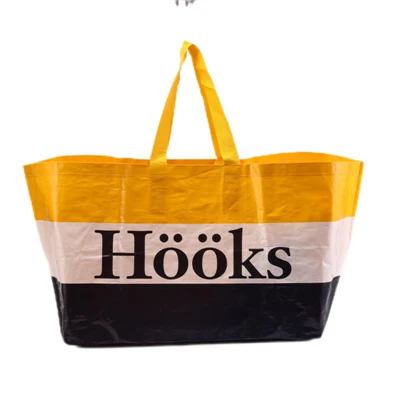
If you’re in the market for PP woven laminated bags and you’re unsure about how they’ll perform in high-heat conditions, I’d love to talk through your specific needs. Whether you’re packaging hot products, transporting goods in hot climates, or storing materials near heat sources, we can work together to find the right bag for your application. No generic quotes, no one-size-fits-all solutions—just practical advice and high-quality bags that get the job done right.
Moving Bags References
- Institute of Packaging Professionals. (2021). Thermoplastic Packaging Materials: Properties and Applications for Bulk Shipping. Naperville, IL: IoPP Publications.
- Polypropylene Manufacturing Association. (2019). Resin Property Guide for Industrial Packaging. Washington, D.C.: PMA Technical Series.
- European Federation of Packaging and Environment. (2020). Temperature Resistance of Woven Polypropylene Packaging. Brussels: FEPA Material Testing Report No. 17.
- ASTM International. (2018). Standard Test Method for Temperature Resistance of Plastic Packaging Materials for Bulk Products. West Conshohocken, PA: ASTM D4595-18.
Jiade (Wenzhou) Daily Necessities Co., Ltd.
As one of the most professional pp woven laminated bag manufacturers and suppliers in China, we’re featured by quality products and good price. Please rest assured to buy bulk discount pp woven laminated bag from our factory. We also accept customized orders.
Address: Building2,NO.1299,keji Road, Longgang City,Wenzhou City,Zhejiang Province,China.
E-mail: lhf@lianhaibag.com
WebSite: https://www.jiadebag.com/
