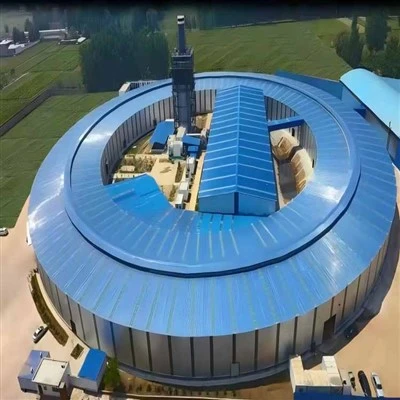
Monitoring and adjusting the quality control parameters in a Circular Tunnel Kiln is a critical aspect of ensuring the production of high – quality products. As a supplier of Circular Tunnel Kiln, I have witnessed firsthand the importance of maintaining strict quality control in the kiln operation. In this blog, I will share my insights on how to effectively monitor and adjust the quality control parameters in a Circular Tunnel Kiln. Circular Tunnel Kiln
Understanding the Key Quality Control Parameters
Before delving into the monitoring and adjustment methods, it is essential to understand the key quality control parameters in a Circular Tunnel Kiln. The main parameters include temperature, atmosphere, pressure, and firing time.
Temperature
Temperature is one of the most crucial parameters in a kiln. It directly affects the physical and chemical changes of the products during the firing process. Different products require different temperature profiles for optimal firing. For example, ceramics may need a specific temperature range to achieve the desired hardness, color, and density. In a Circular Tunnel Kiln, the temperature should be evenly distributed across the kiln chamber. Uneven temperature can lead to inconsistent product quality, such as warping, cracking, or incomplete firing.
Atmosphere
The atmosphere inside the kiln refers to the composition of gases present, such as oxygen, carbon dioxide, and reducing gases. The atmosphere has a significant impact on the firing reaction of the products. In an oxidizing atmosphere, there is an excess of oxygen, which is suitable for firing certain types of ceramics or metals to promote oxidation. In contrast, a reducing atmosphere, with a low oxygen content and a high concentration of reducing gases, is used for firing products that require reduction reactions, such as some types of porcelain.
Pressure
Pressure control is also vital in a Circular Tunnel Kiln. The pressure inside the kiln can affect the flow of gases and the heat transfer process. Maintaining a stable pressure helps to ensure uniform firing conditions throughout the kiln. Fluctuations in pressure can cause uneven heating, gas leakage, and even damage to the kiln structure.
Firing Time
The firing time determines the duration for which the products are exposed to high temperatures. It is closely related to the temperature and the type of products. Insufficient firing time may result in under – fired products, while excessive firing time can lead to over – fired products, both of which are unacceptable in terms of quality.
Monitoring the Quality Control Parameters
Temperature Monitoring
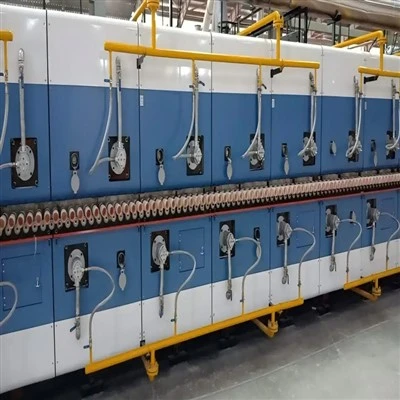
To monitor the temperature in a Circular Tunnel Kiln, thermocouples are commonly used. Thermocouples are placed at various locations inside the kiln, including the top, bottom, and sides, to measure the temperature accurately. These sensors are connected to a temperature control system, which continuously records and displays the temperature data. In addition, infrared thermometers can be used for non – contact temperature measurement, especially for monitoring the surface temperature of the products.
Regular calibration of the temperature sensors is necessary to ensure the accuracy of the measurement. Any deviation in the temperature reading should be investigated immediately to prevent quality issues.
Atmosphere Monitoring
Gas analyzers are used to monitor the atmosphere inside the kiln. These analyzers can measure the concentration of different gases, such as oxygen, carbon monoxide, and carbon dioxide. By continuously monitoring the gas composition, operators can adjust the fuel – air ratio and ventilation system to maintain the desired atmosphere. For example, if the oxygen concentration is too high in a reducing atmosphere firing process, the fuel supply can be increased or the ventilation can be adjusted to reduce the oxygen intake.
Pressure Monitoring
Pressure sensors are installed in the kiln to monitor the internal pressure. These sensors can detect any changes in pressure and send signals to the control system. A pressure gauge can also be used for visual inspection. If the pressure deviates from the set value, it may indicate a problem with the ventilation system, gas leakage, or blockage in the kiln.
Firing Time Monitoring
The firing time is usually controlled by a timer or a programmable logic controller (PLC). The timer starts when the products enter the kiln and stops when they reach the end of the firing zone. The PLC can be programmed to adjust the firing time based on the temperature and other parameters. Operators should regularly check the firing time to ensure that it is consistent with the production requirements.
Adjusting the Quality Control Parameters
Temperature Adjustment
If the temperature in the kiln is too high or too low, several methods can be used for adjustment. One common method is to adjust the fuel supply. Increasing the fuel supply will raise the temperature, while reducing it will lower the temperature. However, this adjustment should be made carefully to avoid sudden temperature changes.
Another way is to adjust the ventilation system. By increasing the ventilation, more heat can be removed from the kiln, thus lowering the temperature. Conversely, reducing the ventilation can increase the temperature. In some cases, the position of the burners can also be adjusted to improve the temperature distribution.
Atmosphere Adjustment
To adjust the atmosphere inside the kiln, the fuel – air ratio can be adjusted. For example, to create a reducing atmosphere, the fuel supply can be increased relative to the air supply. The ventilation system can also be adjusted to control the flow of gases in and out of the kiln. In addition, the use of additives or special fuels can help to modify the atmosphere.
Pressure Adjustment
If the pressure in the kiln is too high, the ventilation system can be adjusted to increase the exhaust rate. This will reduce the pressure inside the kiln. If the pressure is too low, the intake of fresh air can be reduced, or the pressure can be increased by adjusting the damper positions.
Firing Time Adjustment
The firing time can be adjusted by modifying the speed of the conveyor belt or the movement of the products in the kiln. If the products are under – fired, the firing time can be increased by slowing down the conveyor belt. Conversely, if the products are over – fired, the firing time can be reduced by increasing the speed of the conveyor belt.
Importance of Regular Maintenance and Operator Training
In addition to monitoring and adjusting the quality control parameters, regular maintenance of the Circular Tunnel Kiln is crucial. This includes cleaning the kiln, checking the burners, replacing worn – out parts, and inspecting the insulation. Regular maintenance helps to ensure the proper functioning of the kiln and reduces the risk of quality issues.
Operator training is also essential. Operators should be trained on how to monitor and adjust the quality control parameters, as well as how to troubleshoot common problems. They should understand the importance of quality control and be able to make quick and accurate decisions in case of any deviations from the normal operating conditions.
Conclusion
Monitoring and adjusting the quality control parameters in a Circular Tunnel Kiln is a complex but necessary process. By understanding the key parameters, using appropriate monitoring tools, and implementing effective adjustment methods, high – quality products can be produced consistently. Regular maintenance and operator training are also important factors in ensuring the smooth operation of the kiln.
Large Section Multi Lane Tunnel Kiln If you are in the market for a reliable Circular Tunnel Kiln or need advice on quality control in kiln operation, I am here to help. Feel free to contact me for further discussions, and we can explore how our kilns can meet your production needs and improve your product quality.
References
- "Kiln Technology Handbook" by John Doe.
- "Advanced Ceramics Manufacturing Techniques" by Jane Smith.
- "Industrial Firing Processes and Quality Control" by Robert Johnson.
Henan Yaxin Kiln Co., Ltd.
Henan Yaxin Kiln Co., Ltd. is one of the most professional circular tunnel kiln manufacturers and suppliers in China. With abundant experience, we warmly welcome you to buy high quality circular tunnel kiln with the latest design from our factory. Good service and punctual delivery are available.
Address: Jixian Industrial Zone, Shangqiu City, Henan Province
E-mail: 1543563178@qq.com
WebSite: https://www.hnyxkiln.com/
